UK payload teams reported flight-model calibration campaigns for Ariel’s spectrograph chain, drawing fresh attention across UK laboratories, agencies and industrial partners tracking ESA Ariel mission. Error budgets shrink only when thermal and optical tests agree. Allied counterparts in Europe watch UK decisions for signals about reliability as a partner on shared missions and supply chains. Those tensions will define the next twelve months more than any single press conference. Calibration is the mission.
ESA project scientists confirmed confidence in UK contributions as schedule pressure mounts, drawing fresh attention across UK laboratories, agencies and industrial partners tracking European space science. Consortium politics soften when data quality is undeniable. Investors and primes describe a familiar pattern: strong science, thinner production engineering, and optimism that the gap can be closed in a single spending review. A defence science official told Nebuluggage: “Communities will support launch if they see skills and honesty, not just press releases.” Whether the UK converts this into durable advantage depends on boring follow-through. Competence buys influence.
UCL and partner labs outlined detector characterisation under flight-like conditions, drawing fresh attention across UK laboratories, agencies and industrial partners tracking exoplanet instrumentation. Data quality sits beneath the politics. Without metrology, provenance and reproducible pipelines, dashboards and AI summaries amplify noise and undermine operator trust. Detector quirks become science systematics later. Environmental and planning stakeholders insist that consent is earned through monitoring data and community funds, not through branding alone. Independent peer review and published datasets remain the cleanest credibility route. Know thy noise.
Calibration as the quiet mission-critical work
UK Space Agency defended industrial and academic roles that maximise return on ESA subscription, drawing fresh attention across UK laboratories, agencies and industrial partners tracking UK space science policy. Subscription without capable teams is expensive spectator sport. Cyber and physical security requirements add cost and time, particularly where civil and defence users share ground segments or compute. Schedule buffers look thin wherever specialist labour markets stay overheated. Pay and participate. Regional economies watch closely. From Shetland to Teesside and Cornwall, leaders want apprenticeships and supplier contracts, not merely fly-in announcements that vanish after the photocall.
Graduate engineers accelerated rare end-to-end experience from lab to flight hardware reviews, drawing fresh attention across UK laboratories, agencies and industrial partners tracking skills. Ariel is a training constellation of its own. Standards bodies and test houses quietly shape timelines whenever qualification campaigns queue behind higher-priority aerospace work. International collaborators will judge Britain on cadence, not communiqués. Missions mint talent. For readers outside the sector, the practical test is whether operators, clinicians or grid engineers change a procedure because of the new evidence.
Thermal engineers reassessed stability requirements that dominate mechanical design debates, drawing fresh attention across UK laboratories, agencies and industrial partners tracking spacecraft engineering. Milli-kelvin arguments decide scientific yield. Regional mayors frame the project as part of a wider innovation corridor narrative that must still show supplier invoices locally. An industry consortium lead told Nebuluggage: “Open data without curated uncertainty simply moves the error downstream.” Local consent can evaporate quickly if monitoring promises slip. Temperature is destiny.
Data pipeline architects published ground segment plans for atmospheric retrieval at scale, drawing fresh attention across UK laboratories, agencies and industrial partners tracking exoplanet science operations. European partnerships remain the practical route for scale, whether through ESA mission roles, Horizon collaborations or shared launcher supply chains that British firms already understand. Thousands of worlds demand industrialised analysis. Mission assurance specialists warn that software assurance and model-based systems engineering remain under-discussed in public briefings. The industrial strategy story only holds if purchase orders follow rhetoric. Science ops is software.
University consortia and industrial primes
Public audiences previewed why surveying atmospheres beats another pretty planet portrait alone, drawing fresh attention across UK laboratories, agencies and industrial partners tracking science communication. Comparative climatology is the deeper story. Export-control lawyers have become unexpected members of science teams whenever components cross ITAR or dual-use thresholds. Assured performance under degraded conditions is the test that matters. Explain the survey logic. Officials in London increasingly frame the story through industrial strategy, asking whether each scientific win converts into exportable capability and resilient services rather than a one-off paper.
Industrial primes challenged assurance evidence packs for UK-built subsystems, drawing fresh attention across UK laboratories, agencies and industrial partners tracking space industry. Reviews are where schedules go to age. Open research advocates push for data releases that are usable, not merely compliant checkboxes after embargo windows. Skills retention may prove harder than capital equipment procurement. Assurance is the critical path. In quieter meetings, programme leads concede that documentation, spare parts and training often decide operational readiness more than the glittering primary hardware.
Spectroscopists reaffirmed line lists and opacity databases feeding retrieval tools, drawing fresh attention across UK laboratories, agencies and industrial partners tracking laboratory astrophysics. Space missions lean on unglamorous lab spectroscopy. Operators on the sharp end — grids, clinics, satcom desks — want playbooks and thresholds, not only peer-reviewed PDFs. A defence science official told Nebuluggage: “Communities will support launch if they see skills and honesty, not just press releases.” Transparency about risk is still rarer than celebratory language. Labs underwrite orbits.
Schedule risk managers calibrated margin against launch window slips and facility queues, drawing fresh attention across UK laboratories, agencies and industrial partners tracking mission management. Talent is the binding constraint. Visas, university funding and industrial salaries jointly determine whether the next instrument team forms in Britain or relocates mid-project. Shared European facilities create shared queues. Former programme directors argue that Britain underestimates integration risk whenever it celebrates subsystem beauty. Secondary suppliers need forecast stability to invest in tooling. Queue risk is real.
What Ariel means for UK planetary science careers
Equality leads integrated efforts to keep instrument teams demographically broader than historic norms, drawing fresh attention across UK laboratories, agencies and industrial partners tracking STEM culture. Mission prestige should not recreate closed clubs. Apprenticeship leads say visibility of long-term contracts determines whether young technicians stay in the sector. Metrology and provenance are becoming competitive differentiators. Culture is performance-relevant. The UK angle is unmistakable: facilities, standards and skilled people still cluster around Harwell, Culham, Glasgow and the northern research corridor even as global competition intensifies.
Archive designers scrutinised FAIR data commitments for Ariel community products, drawing fresh attention across UK laboratories, agencies and industrial partners tracking open science. Exoplanet science thrives on comparable products. Parliamentary committees continue to request clearer milestone charts that distinguish aspiration from funded scope. Cross-government coordination remains uneven between security and growth briefs. Standards enable comparison. For readers outside the sector, the practical test is whether operators, clinicians or grid engineers change a procedure because of the new evidence.
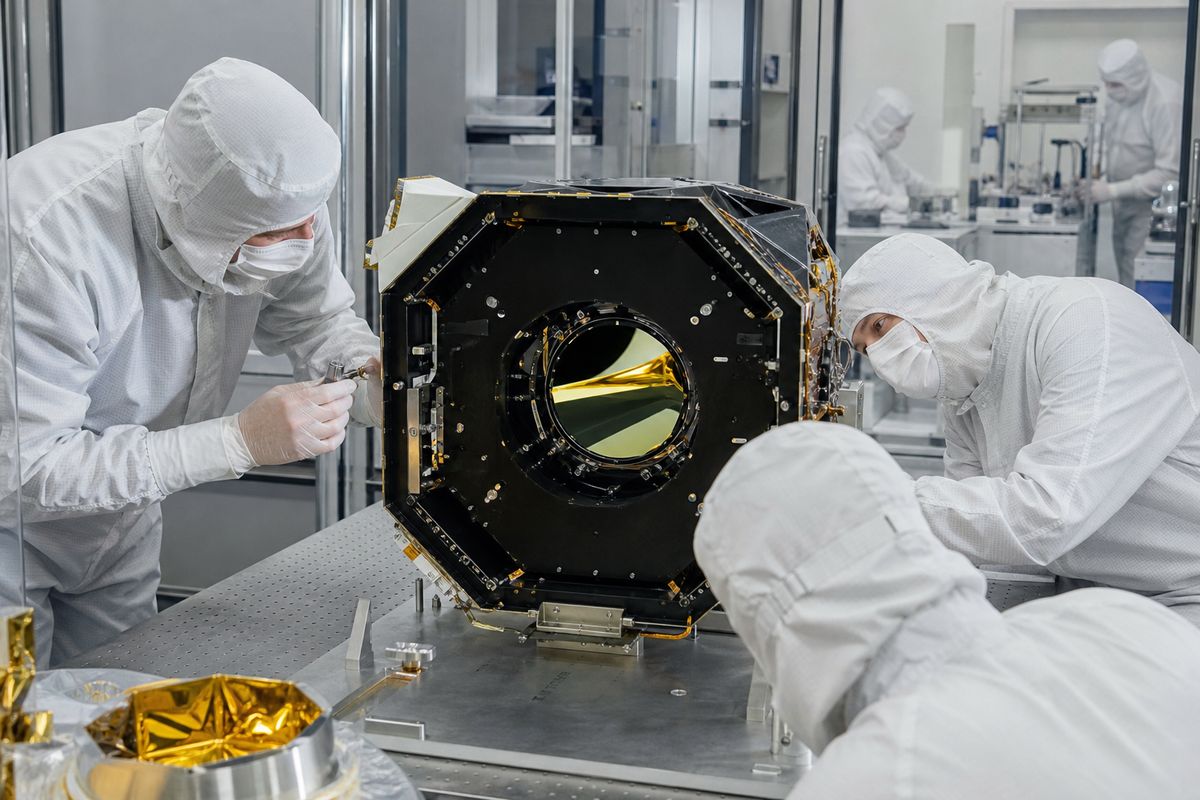
UK cleanroom operators prioritised contamination control discipline during integration, drawing fresh attention across UK laboratories, agencies and industrial partners tracking contamination control. A fingerprint can cost a molecular feature. Programme engineers stressed that configuration control and spare-parts logistics often decide whether a laboratory result survives contact with operations. A former regulator told Nebuluggage: “If the supply chain cannot certify parts at volume, strategy documents are fiction.” Public trust hinges on admitting what is not yet solved. Cleanliness is scientific.
Partner nations benchmarked interfaces between UK hardware and wider payload responsibilities, drawing fresh attention across UK laboratories, agencies and industrial partners tracking international collaboration. Budget realism hangs over every claim. Multi-year settlements help planning, yet inflation in cryogenics, composites and specialist labour can erase headline uplifts before hardware ships. Interface control documents prevent diplomatic incidents. Treasury and departmental officials still ask for credible benefits cases that survive scrutiny from the National Audit Office mindset, even when projects are scientifically elegant. The comparison class is global; nostalgia is not a strategy. ICDs keep peace.
Science advisory groups negotiated target selection philosophies balancing novelty and statistical power, drawing fresh attention across UK laboratories, agencies and industrial partners tracking exoplanet strategy. Survey design is a scientific instrument. University groups tied to the effort say doctoral training and technician pathways are as strategic as any single instrument upgrade. Delivery boards will have little patience for recycled milestones. Choose samples wisely. Security and civil science now share sensors, catalogues and computing more often than organisational charts imply, which raises governance questions as fast as it creates opportunity.